Monday, 17 April 2017

Overcoming Racial Diversity In The U.S.

Like any progressive first-world country, millions of foreign workers and immigrants flock to the United States for a greener pasture. Known for years now as the land of opportunity, people have the chance to transform their lives for the better in a country that has welcomed millions of other races for centuries now.
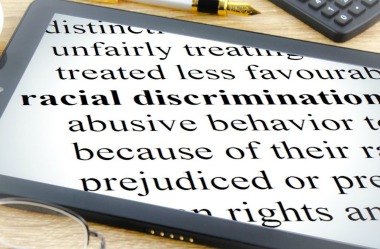
Although much has changed when black slavery was still a thing, the many technological advancements we are now enjoying has not put a stop to the issue of racial diversity and discrimination. Others still pass judgment to the other person just because of their race and appearance. Amidst the recovering economy of America lies a deep-rooted problem on racism that seems to be far from over because of the controversial victory of President Donald Trump (who is also known to say racist and sexist remarks on live television).

Not only in the United States but all over the world, racial discrimination persists to be a nagging problem of every society. Anyone who doesn’t belong is sure to be discriminated.

Today is the International Day for the Elimination of Racial Discrimination, created in 1966 by the United Nations to address social injustices based upon race. While many might see racism as an issue of skin color or ethnicity, Gary Edmonds of Food for the Hungry says marginalization often takes place within people groups based upon heritage and gender — and he believes faith and dignity are core to restoring hope.

(Via: https://www.mnnonline.org/news/becoming-true-change-agents-against-discrimination/)

Even law enforcers who are supposed to be unbiased and should uphold what is morally fair and just have also been guilty of discrimination in the line of duty.

The head of a major international law enforcement organization on Monday apologized for "the actions of the past and the role that our profession has played in society's historical mistreatment of communities of color."

International Association of Chiefs of Police President, Terrence M. Cunningham, struck a conciliatory tone, acknowledging the deep-seated, generational mistrust between minorities and the police.

Cunningham, speaking at a meeting of the group in San Diego, said law enforcement's history is "replete with examples of bravery, self-sacrifice and service to the community."

But Cunningham said at the same, "the history of policing has had darker periods."

"There have been times when law enforcement officers because of the laws enacted by federal, state and local governments have been the face of oppression to far too many of our fellow citizens.

In the past, the laws adopted by our society have required police officers to perform many unpalatable tasks, such as ensuring legalized discrimination or even denying the basic rights of citizenship to many of our fellow Americans," Cunningham said.

(Via: http://edition.cnn.com/2016/10/17/us/police-chiefs-group-minorities-apology/)

Although efforts are being taken especially by socio-civic leaders and organizations to reduce cases of discrimination and eventually put a stop to it for good, it is a long and difficult fight where the end is still not in sight.

In the past year, there has been a lot of talk about racism in the region and Sabry hopes this event – now in its 16th year – will help kickstart more dialogue about the issue.

"There is racism," Sabry said.

"Sometimes it's more obvious and to the surface," she added. "We're hoping that people, through understanding each other, that there will be less of the unknown and treat each other as human beings instead of labelling and stereotyping and being leery of other people because they just don't understand them."

(Via: http://www.cbc.ca/news/canada/kitchener-waterloo/kitchener-event-day-elimination-racial-discrimination-1.4033088)

For a major change in the public perception to take place, it must all begin within ourselves. Opening up our minds and hearts to what makes everyone on this planet unique and diverse is the first step to ending discrimination. We must all understand that there is no ideal conformity that everyone should follow and that we should all celebrate our individuality. We may look alike but we all deserve to enjoy the same respect and rights as the person next to us.

The blog article Overcoming Racial Diversity In The U.S. was first published to https://www.soulvisual.com/blog/


source https://www.soulvisual.com/blog/overcoming-racial-diversity-in-the-u-s/

Wednesday, 12 April 2017

Electronics Ban On U.S.-bound Flights

Air travel imposes a lot of restrictions on travelers. From check in until arrival, passengers must observe air travel etiquette that is widely practiced in the industry throughout the globe, most of which are precautionary measures for the safety of everyone on the flight.

While most restrictions include limitations on baggage weight and content (checked-in or hand carry), the use of electronics in-flight is also a big no-no. Although using electrical gadgets has actually been allowed on longer flights, the U.S. now imposes a strict rule to ban the use of electronics on some U.S.-bound flights.

The US government will soon begin enforcing a ban on travelers bringing electronics in carry-on luggage on some flights traveling to the US.

News of the ban landed Monday when Royal Jordanian Airlines said in a since-deleted tweet that it received a directive from "concerned US departments" that passengers would not be permitted to bring any electronic items into the plane's cabin, except cellphones and medical devices.

Cameras, tablets and ebooks, laptops, and other electronics will have to be packed into checked luggage, said an emailed confidential Homeland Security edict to airlines.

The ban is expected to go into effect on Tuesday, and affect flights from several countries in the Middle East and Africa.

A spokesperson for Homeland Security would not comment on the potential security precautions, but said the department would "provide an update when appropriate."

(Via: http://www.zdnet.com/article/us-bans-most-electronics-from-some-us-bound-middle-eastern-flights/)

As expected, a major policy like this that impact a great number of people is sure to hit the headlines here and abroad.

The US government is expected to bar passengers from bringing any electronic device larger than a cellphone on some flights to and from the Middle East and Africa.

Royal Jordanian Airlines on Monday tweeted a description of an electronics ban implemented by the US. But the airline deleted the tweet a few hours later.

According to Royal Jordanian's deleted tweet, all electronic devices apart from cellphones and necessary medical equipment must be checked in to the cargo hold with luggage. That includes laptops, cameras, tablets, and DVD players.

The airline indicated that the policy would go into effect on March 21.

These changes are a result of a security concern related to passengers on nonstop flights from some Middle Eastern countries, an unnamed US official told CNN's Jon Ostrower.

(Via: http://www.businessinsider.com/us-government-laptop-ban-middle-east-africa-flights-dhs-2017-3)

What could have prompted such a bold move from the U.S. government? Is there a national security threat that we should all be aware of?

The prohibitions on electronics from select countries on flights to the U.S. is based on information developed overseas about a threat, an official told CBS News. The official said the electronics ban isn’t related to a specific threat, but is in response to intelligence gathered overseas.

The officials said the Department of Homeland Security is in the process of notifying the countries and airlines affected by the ban on large electronics. They will have 96 hours to implement the ban.

(Via: http://www.cbsnews.com/news/electronics-ban-on-some-us-bound-flights/)

The standard protocol during air travel is that electronic gadgets should be hand carried by the passenger lest it gets lost during travel, for which the passenger could not sue the aircraft for its loss. But because of security reasons that could pose a threat to the U.S. national security, these measures are now put into place because of possible terroristic activities in the countries included in the list.

Such a move is not at all that surprising considering the President’s stance against terrorists and how he takes the safety of all Americans seriously. Since the ban is just temporary, it probably won’t hurt if the people concerned abide with it until the ban is lifted and the risk is no longer there.

Electronics Ban On U.S.-bound Flights is available on https://www.soulvisual.com/blog/


source https://www.soulvisual.com/blog/electronics-ban-on-u-s-bound-flights/

Friday, 7 April 2017

Why Is Cosmetic Medicine So Popular Today?

While most Americans are fighting for better health care services and affordable health insurance coverage, there are some who are fighting a different battle. It all comes down to perspectives. What is important for you may not be important to the other person. And while all of us value the importance of a healthy mind and body, there are those who put equal importance to their aesthetics.

The field of cosmetic medicine has been flourishing for years now because the demand for it is growing. The aging of the baby boomers resulted to the rise of cosmetic medicine clinics to help this generation combat or delay the signs of aging.

Not only has the number of consumers who want to have cosmetic surgery doubled since 2013, but the top four treatments they want to have are all technology based, including energy for skin tightening, laser and light for skin imperfections, body sculpting and laser hair removal. That’s according to survey results released this week by The American Society for Dermatologic Surgery (ASDS).  

The ASDS reports that they conducted a blind online survey April, 20, 2016 to May 1, 2016 using Survanta, a web-based service. They received a total of 7,322 responses. This is what they found:

Popularity Contest

Ranking highest are treatments to tighten skin or smooth wrinkles using ultrasound, laser, light or radiofrequency at 60%. Laser and light treatments come in second (51%), with body sculpting (50%) and laser hair removal (48%) in the third and fourth spot.

(Via: http://cosmeticsurgerytimes.modernmedicine.com/cosmetic-surgery-times/news/cosmetic-surgery-insights-what-consumers-want)

Why do people want to get anything done in their bodies in the first place? Well, the answer probably lies in their satisfaction to their body image. As we age, our body changes too – not always for the better, though. And as such, people who can afford to undergo cosmetic surgery do so to improve their appearance. But just like with any other procedure, especially the invasive ones, there are risks involved.

The popularity of social media also gave rise to insecure men and women who compare themselves and their lives to the stars that they follow. Thus, many also want to have pouting lips like Kylie Jenner or the hourglass figure of Kim K. among others. These are unrealistic expectations that are impossible to do on your own (even with the help of makeup) but may be achieved with the help of say, plastic surgery. But it is an addiction that is unlike any other.

The cosmetic surgery boom is being fuelled by our insatiable appetite for looking good and staying youthful, as well as the proliferation of technological advancements and less invasive alternatives to full cosmetic surgery. Just check out the images of Kim Kardashian’s vampire facial, Kylie Jenner’s lip fillers, Brazilian butt lifts or breast enhancements on Instagram and Snapchat if you want to know what’s trending.

According to the latest figures from IMCAS, the International Master Course on Ageing Skin, Europe’s cosmetic market is growing at a rate of 6 per cent a year across all segments. By comparison, the United States shows 7 per cent annual growth, Latin America is almost 9 per cent and the Asia-Pacific region has the highest growth of more than 13 per cent.

The public's perception towards it has significantly changed as well.

“The cosmetic sector has seen a 300 per cent rise in popularity over the last decade with one in ten procedures being non-surgical. This is a result of improvements in safety, efficacy and reduction in downtimes, and is further fuelled by heightened media exposure and celebrity endorsements which have removed some of the stigma attached to ‘having work done’. But this rapid growth has undoubtedly exceeded the improvements in regulation of the industry which should go hand in hand,” warns Rajiv Grover, London plastic surgeon and former president of the British Association of Aesthetic Plastic Surgeons.

The number of unqualified cosmetic doctors has also increased as the demand for their services grows as well as the use of untested technologies and materials continues to be a health threat others just shrug off in their quest to achieve perfection.

According to Dr. Constantino G. Mendieta, chairman of the Media Committee of the American Society for Aesthetic Plastic Surgeons: “It’s about time we started demanding more of claims made by industry. The marketing machine behind new treatments and products is driving consumers to ask surgeons to offer many procedures that have not been proven or may not have enough research behind them to substantiate claims.

“Surgeons are often driven by this demand fearing they may miss the next greatest thing since sliced bread, forcing them to jump into technology that may not be proven only to realise the results don’t accomplish what was claimed. We welcome setting standards and having more research prior to mass marketing.”

(Via: https://www.raconteur.net/lifestyle/staying-safe-amidst-the-hype-for-cosmetic-procedures)

In the end, it is still up to you if you opt to get something done in your body – invasive or not. As long as you are aware of the risks involved, what the process will entail, and how much it will cost, you are a consenting adult who agrees to subject your body to these elective medical procedures at your own risk.

Do not let society tell you what a positive body image should look like. As long as you are healthy and feel comfortable in your own skin, that is all that matters.

The blog article Why Is Cosmetic Medicine So Popular Today? See more on: www.soulvisual.com


source https://www.soulvisual.com/blog/why-is-cosmetic-medicine-so-popular-today/

Sunday, 2 April 2017

Home Improvement Trends In The U.S.

Is appearance still important in times of crisis? Probably not for those practical and level-headed consumers. But because social acceptance is important for many, it is not enough that you put food on the table and send your kids to school, keeping a beautiful home you can show off to others also matters.

Spring has come and the weather is improving. It means hibernation is almost over and we can enjoy the outdoors. Lots of work is involved in making your home attractive once more after sustaining a nasty blow from Mother Nature last winter, most of which involves home improvement projects and repairs.

In 2015, U.S. homeowners spent $221 billion on home improvement, maintenance, and repairs, according to a report released Wednesday by the Harvard University’s Joint Center for Housing Studies (JCHS). The center estimates 2020 spending to reach $243 billion.

And despite this additional expense on sprucing up your home, it actually means good news for the country’s economy.

There are several drivers for the booming home improvement market, according to the JCHS. Rising home prices and household incomes, aging housing stock and a pickup in household growth are the primary contributors.

Discretionary projects like kitchen and bathroom remodel and room additions, and outside attachments like decks, accounted for 40% of spending in 2007 (before the housing market collapse). By 2015 that percentage had dropped to 33%. Spending on repairs has risen from 40% to more than 50% in the same period.

Spending on home improvement has been concentrated in metropolitan areas, where home values and household incomes are high. In the 25 metro areas tracked by the JCHS, homeowners spent nearly $100 billion in 2015, about 45% of the national total on homeowner improvements. That’s an average of $3,400, about 15% more than the national average in 2015 of $2,970.

(Via: http://247wallst.com/housing/2017/03/02/us-homeowners-spent-221-billion-on-home-improvements-in-2015/)

And the home renovation industry is hopeful that business will be more booming this year than it did the previous year since consumers enjoy higher spending power, thanks to a more progressive economy that has somewhat recovered from the crisis of the previous decade.

Monday marks the first day of Spring and with winter in the rear view mirror, local home improvement businesses are ready to get back to work.

Johnathen Brewbaker with Peerless Block and Brick says contractors and homeowners are already catching “spring fever.”

"It's quite a bit slower in the winter time but it gives us time to get caught up and prepared for the spring time whenever it hits,” Brewbaker said.

Add to that what Brewbaker has seen with rising consumer confidence in the economy, 2017 looks to be a better year for the home improvement business.

“I think it'll be a little busier than last year with the economy boosting up,” Brewbaker said. “We definitely saw a downfall last year with the coal mines and we've already seen a pick-up since the coal mines have."

(Via: http://www.wvva.com/story/34949567/2017/03/Sunday/spring-means-new-opportunities-for-area-home-improvement-businesses)

While all families have priorities, they won’t hesitate to improve their home or to add a new feature if there is extra money in the budget. More and more households are expected to renovate their homes with the economy doing much better than it did in previous years. Materials cost have also gone lower, which is a major factor why more people can now afford to make their homes more livable and beautiful than before.

Although labor remains to be a constraint, a lot of homeowners have now decided to roll up their sleeves and do the actual work themselves. Just do a quick browse on Youtube and you will find countless home renovation DIY videos even beginners can safely and effectively do on other own. It is also a fun and exciting bonding opportunity for families that they can be proud of.

Home Improvement Trends In The U.S. was first published on www.soulvisual.com


source https://www.soulvisual.com/blog/home-improvement-trends-in-the-u-s/

Monday, 27 March 2017

Are Computers Getting Smarter Than Us?

Modern living relies on a lot of technology. From household appliances to entertainment gadgets, we depend on it in everything we do. Who would’ve thought a couple of decades ago that we will be using smartphones and smart televisions when we used to watch from bulky television boxes with no other special features? Social media is a far bigger platform with people’s lives and businesses revolving around it.

Technology is definitely more superior now. But we should acknowledge the people and their brilliant minds behind all these advancements. It has even confused come and made them think that computers have become smarter than us. And actually, it might just be a possibility sooner than we expected.

Your smartphone is about to get a brain in the form of a neurally inspired computer chip, and it will be based on the first truly new sort of computing hardware since the invention of computers themselves. These chips are already beginning to change the industry, but now they’re making their way into consumer tech — and analysts are seriously under-predicting the impact these neural computers could have on digital economies, and the shape of the digital generation.

Neural network code underlies many of our interactions with technology these days, whether it’s voice commands or predictive keyboards, personal fitness tracking or just efficient Amazon shipping schedules. Machine learning experts have already created neural networks for a huge variety of tasks. The most useful applications, though, require access to a remote server to do the heavy computational lifting of neural network code, and that severely limits the ways in which that code can be used. A smartphone with a physical brain, on the other hand, could let developers fully realize the potential of these revolutionary software tools.

Indeed, the human race has achieved so much over a short period of time. For a species that is said to have evolved from monkeys, we have transformed the world that we know now making everything digital whenever possible.

But let’s go back to the beginning: The first computers were human beings, sitting in rooms, pushing beads on abacuses to calculate trajectories for mortar shells during World War II. These were biological neural networks (brains) doing calculations they were horribly suited to perform, and to get through the work more efficiently, scientists had to create machines designed from the ground-up to do that type of calculation. The result was the first digital computer, and it has become as essential a tool for mathematics today as the human brain was in the 1940s.

Now, in the era of machine learning, mankind faces a similar problem: circumstances again demand that we do a whole lot of a particular type of computation, and once again, the only computers we have on hand to do that computation are poorly suited to the job. Digital computers are simply very bad at running neural network code, and once again scientists have been forced to go back to the drawing board and create a more tailored computing machine: brain-inspired, neuromorphic computers. Led by IBM’s flagship TrueNorth chip, they represent the first real step forward for computing since the time of Alan Turing.

(Via: https://www.inverse.com/article/27902-neuromorphic-computers-ibm-truenorth-true-north-machine-learning-neural-network)

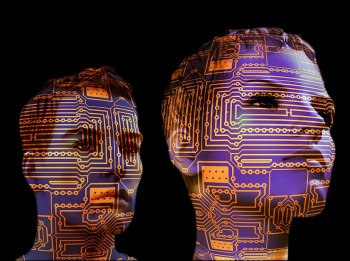
As if we haven’t created enough robots already, computer experts are now aiming to implant computer chips in the human brain.

Humans will soon be implanting tiny computers in their brains to make themselves smarter, funnier and sexier, a prominent futurist has predicted.

Ray Kurzweil, director of engineering at Google, has made a name for himself through his predictions. Since the 1990s, he has made 147 predictions, 86% of which have come true.

Speaking at the South by Southwest (SXSW) conference in Austin, Texas, this week, Kurzweil predicted that "the singularity" - the moment when artificial intelligence surpasses human intelligence - will occur in 2029.

"By 2029, computers will have human-level intelligence," said Kurzweil.

"That leads to computers having human intelligence, our putting them inside our brains, connecting them to the cloud, expanding who we are.

"Today, that's not just a future scenario. It's here, in part, and it's going to accelerate."

(Via: http://www.mirror.co.uk/tech/computers-embedded-brains-make-smarter-10045979)

Having computers that can think like a human may be a good or bad thing. Perhaps, artificial intelligence can be the ultimate cyber security tool we can use against hackers.

U.S. government computer systems remain unsecured and vulnerable to cyber attacks from a host of bad actors, according to a new government report that identifies a range of weaknesses in U.S. cyber defenses that could lead to a devastating attack on the American government.

Those in charge of the federal computer networks have failed to address major vulnerabilities for at least the past decade, according to the Government Accountability Office, which disclosed in a recent report that critical networks are "riddled with security vulnerabilities" and open to attack.

(Via: http://freebeacon.com/national-security/u-s-government-computers-still-not-safe-cyber-attacks/)

It is too early to tell, though, what our world will be like when computers are at par with humans intelligence-wise. We may benefit from better computing processes and quality but it can pose a major risk to our safety and security. Data security and data loss will be a thing of the past too. No need to worry about common issues like data recovery when all data is now stored in the cloud. Technology will no longer be just an aspect of our lives but may very well be the ultimate one that rules us all.

The article Are Computers Getting Smarter Than Us? was initially seen on www.soulvisual.com


source https://www.soulvisual.com/blog/are-computers-getting-smarter-than-us/

Thursday, 23 March 2017

Say Goodbye To Snoring And Say Hello To A Good Night’s Sleep

Gone were the days when we hated being told to go to sleep as kids. Our curious and active spirits enjoy the wild outdoors and the many discoveries and learning we make in our daily adventures. But as we grow up and take on more adult responsibilities, rest and relaxation is a welcome reprieve.

But sleep has become more of a luxury for many nowadays. Work is more demanding. When in the past your time after work is just for you and your family, your boss and clients can still reach you now through texts, calls or emails. Technology has become a distraction too. #FOMO or our crazy fear of missing out keeps us glued to our smart gadgets and logged in to our various social media accounts.

It is one of the reasons why we are still wide awake in the wee hours of the morning and it exacerbates a medical condition known as sleep apnea, which has a big impact on sleep quantity and quality. Most snorers suffer from this condition. It requires medical attention because it puts you at risk to certain debilitating conditions.

A 64-year-old Kamal (name changed) suffered stroke recently and hospitalised for the treatment. Later, when the tests were conducted, he was found suffering from obstructive sleep apnea (OSA), which is one of the major causes of stroke.

With obesity, the cases of OSA are constantly being reported in the city. Over the past few years, private hospitals in the city have introduced the polysomnography (PSG) test, which requires a night stay at a hospital. In the test, a machine monitors breathing, heart rate and brain waves. Now, in city also, the test can be done in the comfort of your bedroom.

"Obstructive sleep apnea is a silent killer. People think that snoring is ordinary and ignore it. They take it in lighter mode. But, in reality, it is life-threatening too," Dr Virendra Singh, former superintendent of Sawai Man Singh Hospital and respiratory diseases expert said.

(Via: http://timesofindia.indiatimes.com/city/jaipur/world-sleep-day-snoring-can-be-life-threatening/articleshow/57678173.cms)

The best defense against sleep apnea is to educate yourself about it and ways on how to beat it, so snoring is no longer an issue in your life. Couples can better relate to this scenario since wives often have to put up with their husband’s snoring. Many men sleep with a mouthgard on, just so they no longer have to deal with a cranky wife who is lacking in sleep because of their loud snoring.

When air can’t move freely through your nose and throat during sleep, the surrounding tissues will vibrate.

This produces the sound we know as snoring.

People who are prone to snoring will often have excess throat and nasal tissue – or ‘floppy’ tissue that is more likely to vibrate.

If your tongue is in a position obstructing smooth breathing, this will also cause snoring.

What can you do to minimize snoring and hopefully get rid of it for good?

Change your sleeping position

Elevating your head by four inches can help with breathing, and encourage your tongue and jaw to move forward.

Sleep on your side, not your back

One method to try is attaching a tennis ball to the back of your nightwear (this can be done by sewing a sock to the back of a top, then putting the ball inside).

If you roll onto your back in the night, the discomfort of the ball will cause you to go back to sleeping on your side.

Anti-snoring mouth guards can also help. These appliances work by bringing your lower jaw and/or tongue forwards during sleep, which helps to open your airway.

Clear nasal passages

If your nose is causing issues with snoring, rinse your sinuses with saline before bed.

Other ways to clear your nose include nasal decongestant or nasal strips, which can help you breathe more easily at night.

Dry air can irritate the nose and throat, and cause nasal tissues to swell, which can lead to snoring.

Keeping bedroom air moist, with devices such as a humidifier, can help to remedy the situation.

Some people who snore are overweight. Losing weight may help to reduce fatty tissue in the back of the throat. This can lead to less, or even no snoring.

(Via: http://metro.co.uk/2017/02/24/how-to-stop-snoring-tips-tricks-and-exercises-to-stop-the-habit-6470286/)

Making some lifestyle changes and  consulting a medical expert for help can help people overcome snoring and improve their health. Snoring is often a symptom of sleep apnea, so do not take it lightly. People sleep and no longer wake up because of it. So, get yourself checked and undergo a sleep assessment or even download an app that analyzes your snoring pattern, frequency, and amplitude during sleep. Get back the sleep you have lost and sleep more peacefully from now on.

Say Goodbye To Snoring And Say Hello To A Good Night’s Sleep is available on SoulVisual.com Blog


source https://www.soulvisual.com/blog/say-goodbye-to-snoring-and-say-hello-to-a-good-nights-sleep/

Tuesday, 21 March 2017

The State Of The U.S. Agriculture

Technology may be the apple of our eyes now but there are other industries that matters just as much but do not get the attention it deserves. And I am talking about the agriculture sector. The American may do farming differently right now with the various technologies in place to make crop planting and food farming easier and done at a larger scale but let us also acknowledge the many small-time farmers who do everything like it was did in the past.

As we all become aware of various agricultural and manufacturing processes and its relation to the state of our health, we understand the value of eating food free of chemicals and pesticides that are a common practice in modern-day farming. The demand for organic produce is increasing and now even has a place on the shelves of some major food retailers and supermarkets. More people are patronizing local farmer’s market in search of the freshest and healthiest fruits and veggies in the land. But despite all these breakthroughs, the number of U.S. farmers has reduced over the years and it may be worsened by budget cuts on the agricultural sector by the new administration.

U.S. farmers are getting grayer, their national numbers are on the decline and fewer young people are moving back to farms and ranches. The average age of a principal operator of a U.S. farm is now over 58 years old.

Absent opportunities for manufacturing, recreation or other industries, many of their surrounding small towns are dying off, too. It’s a vicious depopulation cycle in some areas: Young people move out for job opportunities and don’t ever move back, schools consolidate, basic services start to crumble, and the tax base erodes.

The rural population in 2015 stood at 46.2 million – just 14 percent of the U.S. population on 72 percent of the land mass. That represents a decline of 136,000 people between 2010 and 2014, according to USDA’s Economic Research Service. The number of principal operators on farms has been dropping, too – from 2.2 million in 2007 to 2.1 million in 2012. 

(Via: https://www.agri-pulse.com/articles/9062-lesson-6-an-unsung-farm-bill-hero-rural-development-needs-more-champions)

And President Trump is making matters worse when he should be giving back to the population that has helped put him into office. He may have conveniently forgotten that most of his votes came from American rural communities.

Nearly all of Trump's electoral wins were in rural districts, many of which are made up of farming communities. This is where Trump thrived. I have seen it firsthand: I have lived in the city, worked in manufacturing and I'm now a farmer in a small farming town in Central Illinois.

For the progressive movement to make inroads in communities like mine, it needs to put forward a serious plan for how the US government can stop subsidizing corporate farms and instead return the land to small family farmers who work the land. Farmers should not have to farm 20,000 acres of rented land just to make a living.

To move toward a future in which progressives are able to put forward such a plan, it's crucial for everyone in this country -- including city dwellers -- to gain a basic literacy about the agricultural shifts that have taken place in the US and what it would take to move away from corporate agriculture on a mass scale.

(Via: http://www.truth-out.org/opinion/item/39859-why-progressives-should-care-about-us-agricultural-policy)

Clearly, President Trump does not care about the people who believed in his leadership and it is obvious in the policies he is pushing for in Congress.

Agriculture leaders including lawmakers from President Donald Trump's Republican Party on Thursday criticized his planned 21 percent cut to discretionary spending at the U.S. Department of Agriculture (USDA), saying it could take a toll on the rural communities that helped elect him last November.

Trump has proposed slashing the USDA's discretionary budget by $4.7 billion to $17.9 billion by halting funding for rural clean water initiatives and rural business services, reducing some USDA statistical services and cutting county-level staff.

The president has already vowed to alter trade deals that have largely boosted farm incomes and targeted health care policies that have particularly benefited the rural poor.

"America's farmers and ranchers are struggling, and we need to be extremely careful not to exacerbate these conditions," said House Agriculture Committee Chairman Michael Conaway. Farm incomes are down 50 percent from four years ago, he added.

Opposition is already building in Congress.

(Via: http://www.reuters.com/article/us-usa-trump-budget-agriculture-idUSKBN16N0CS)

A country will starve without farmers to feed everybody. And given how difficult farming now is that the elements are far more unforgiving than in the past, the lack of help from the government can be far detrimental and carry with it more disastrous consequences. President Trump should question his priorities now and determine whether he got everything right before enforcing policies that may be the reason for his own undoing and the suffering of the majority of the American populace.

The blog post The State Of The U.S. Agriculture Read more on: www.soulvisual.com


source https://www.soulvisual.com/blog/the-state-of-the-u-s-agriculture/