Friday, 16 June 2017

Scientists March For A Cause

Science continues to evolve alongside technology. It has achieved so much over the centuries and the possibilities are still endless. Science allowed mankind to have a clearer understanding of the world we live in, innovate and improve our lives, cure diseases, and come up with futuristic technologies that define what’s in store for all of us years ahead. And it hasn’t been an easy ride or a cheap one either. Most scientific breakthroughs took years of hard work and lots of money before they paid off. Names of famous scientists will forever be etched in science books and in history as the people who pushed innovation even further so that new discoveries can be made.
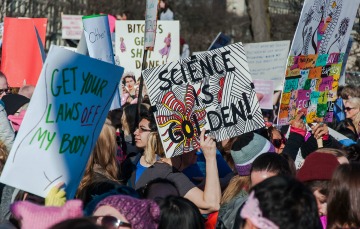
Unfortunately, the field of science has never been free of controversies. From rifts with fellow scientists to controversial treatments, science is just as colorful as its long history. Today, more issues continue to plague the field of science. News of budgets cuts can severely impact scientific programs. Scientists are fed up with the system and will now take their fight to the streets so that people in the Capitol can hear their voices and sentiments.

The upcoming March for Science is frequently described as the first time U.S. scientists will take to the streets.

Epidemiologist Frank Bove and biochemist Ben Allen know better. They are part of a small cadre of “science workers” trying to revive a short-lived organization—named Science for the People (SftP)—that evolved from the 1960s antiwar and civil rights movements and engaged in demonstrations, sit-ins, civil disobedience, and other forms of direct action. But whereas the current marchers want to defend open inquiry and evidence-based policy in response to outside assaults on the profession, SftP was trying to rescue science from itself.

The original group maintained that too many U.S. scientists had become willing tools of an oppressive government that was fighting an unjust war and serving corporate interests. In its early years, SftP disrupted the annual meetings of AAAS (which publishes ScienceInsider), with activists shouting down speakers, accusing prominent scientists of serving the ruling class, and staging counter sessions on hot-button political issues. 

(Via: http://www.sciencemag.org/news/2017/04/scientists-prepare-march-science-people-reboots)

The current administration doesn’t consider science research among others to be the top priority for the federal budget. These drastic budget cuts sure have hit a nerve and scientists are coming out of their labs and clinics to make sure President Trump understands the consequences of his action.

With the election of President Donald Trump, who denies that climate change is occurring and has threatened to shrink research budgets, scientists are again becoming more confrontational in their politics. They’re even taking to the streets, including the nationwide March for Science protests planned for April 22. Physicists, oceanographers and biomedical specialists are expected to join ranks with environmental leaders, K-12 science teachers and others at those gatherings.

(Via: http://www.sandiegouniontribune.com/news/environment/sd-me-political-scientists-20170406-story.html)

We understand that tackling immigration issues are crucial for progress and that national defense should never be compromised either. However, we should not also neglect other equally important issues such as scientific research, climate change, environmental conservation, etc.

As quickly as the idea of a march gained momentum, however, so, too did disagreement over the boundaries of the march. Was the focus to be primarily on climate change? Should federal funding levels for scientific agencies be discussed? Should the march address what might be seen as social or political issues, such as the lack of representation of women and minorities in many scientific fields or the recent focus on sexual harassment in scientific workplaces? 

To some, these ideas were too broad and lacked focus on real scientific issues. There was a risk of going off message, they argued, by adding in politics or speaking towards social justice. Perhaps the Science March is simply not the right time or place for those discussions. To others the focus was too narrow, not inclusive enough. By sidelining issues that are important to many scientists, the March risked becoming inert. The discussions of where to focus the Science March mirror conversations about science in general. What do we include when discussing science? Is this an abstract philosophical discussion or a somewhat messy practical one?

Science does not exist simply as a platonic ideal. Science is a human endeavor that occurs within the context of human organizations. It is not simply experiments and statistical tests and cold facts. Science is inextricably mixed with our ideas about research ethics, ideas about which questions deserve to be asked, and how that knowledge is used. Whether these are framed as political or social issues, the conclusion is the same: science cannot be completely separate from life.

(Via: https://blogs.scientificamerican.com/guest-blog/should-the-science-march-stick-exclusively-to-science/)

The science march is plagued by controversies in itself but it is refreshing to see medical professionals taking a political stand for a change. The nation’s leaders should understand every issue the country faces and not just focus on a few aspects and disregard the rest. All forms of scientific advancements can help the world in a big way. Only with sufficient funding can these be endeavors realized and if the government is taking away this support, how can we expect to deal with science-related issues that are just as important as the safety and security of all Americans.

Scientists March For A Cause is available on SoulVisual Blog


source https://www.soulvisual.com/blog/scientists-march-for-a-cause/

Friday, 9 June 2017

Fake Reality On Social Media

Social media is a universe of its own. Who would’ve thought that so many things can happen in the virtual world known as the World Wide Web? Traveling the world remains to be a dream for many. There are many Americans who have never been out of state, much more out of the country. But there are wanderers who revel in traveling the world and experiencing different cultures and different ideas. While money and time remain to be a problem, those who have strong wanderlust tendencies will find a way to realize their dream of traveling the world one place at a time.

Today, you can see travel photos and videos on social media and feel as if you have traveled the world yourself. Global interconnectivity became possible through the web. And the best part, these are the stories and trips of your friends not just of celebrities. The downside is that as more people use social media, there’s a bigger possibility that these photos and videos are fabricated. Thus, we often encounter the term IRL (in real life) and online reality. At times, we get entertained by these lies but the rising threat and proliferation of fake news urge the government to intervene and take action.

What was really happening in all of these ‘grammable moments: She was depressed, and going through the motions. She felt very lost in what she calls “the fake world” of social media and college life. “I would get all dressed up and be very concerned with how I looked, and I’d go out with these girls who I didn’t really like,” Steimer says. “As soon as I got a group picture I really liked, or a picture that looked like I was having a blast, I’d be like, ‘Okay is everyone drunk enough that they won’t realize when I leave and go home to sit in my bed alone?’”

Back in her room, in bed and depressed, she would scroll through her Instagram feed, jealous of the friends who looked like they genuinely loved their lives. It didn’t occur to her that maybe they were faking it, too. She considered taking a break from school — going home to Rockville, Maryland — but she was afraid that the gap would only make college (and her misery) last longer. She felt like everything about her life as a University of South Carolina sorority girl was contrived, but she lived in the house. She was trapped. But as soon as she could move out, she quit the sorority. Then, most importantly, she stopped posting on social media for the length of her junior year.

(Via: http://www.refinery29.com/2017/03/146733/identity-crisis-causes-social-media-fake-world)

Social media reality may be tempting and can disorient you for a while but you need to remember that it is not real life. These photos may be jaw-dropping and the back story just as interesting because it has one purpose – to earn to thumbs up of people. However, social media can also be used to spread fake news and create conflict among people and nations.

The Pope’s Message for World Youth Day 2017 carried a drawn-out reference to the hi-tech world in which young people are immersed, comparing the memories of their personal experiences with the computer hardware that stores large quantities of data.

“Yet our memories should not remain crammed together, as in the memory of a hard drive,” Francis said. “Nor can we archive everything in some sort of virtual ‘cloud.’ We need to learn how to make past events a dynamic reality on which to reflect and to draw lessons and meaning for the present and the future.”

But the pontiff reserved his strongest words for modern attachments to social media and so-called reality shows, warning youth that virtual friendships and virtual reality often conceal many falsehoods and are no substitute for real interpersonal experiences.

“In the social media, we see faces of young people appearing in any number of pictures recounting more or less real events, but we don’t know how much of all this is really ‘history,’ an experience that can be communicated and endowed with purpose and meaning,” Francis said.

(Via: http://www.breitbart.com/national-security/2017/03/22/pope-francis-warns-young-people-of-fake-reality-of-social-media/)

Considering that the church has issued a statement regarding this problem means it has reached epidemic proportions. The state is also taking initiatives to prevent the spread of fake news and somehow regulate how people make use of social media in their day-to-day.

Germany’s bill punishing social media networks up to 50 million euros ($53.4 million) for hate speech or fake news content also contains provisions allowing people to find the addresses and other personal information of every social media user without a judge’s decision.

On Wednesday, Germany’s Cabinet approved a new bill allowing the government to impose hefty fines on tech companies if they fail to remove fake news or other hateful content. Social networks will have 24 hours to delete certain “criminal” content and seven days to remove other types of criminal content.

Chancellor Angela Merkel’s Cabinet decided on rules that would lead to fines up to 50 million euros ($53.4 million) if Twitter, Facebook and other social media sites fail to comply.

Missing from reports of those hefty fines, has been any acknowledgement that the bill’s current loose definition of “social networks” could lead to other internet services like email platforms, private blogs, or forums falling under the regulatory regime.

(Via: https://heatst.com/tech/german-bill-curbing-fake-news-makes-social-media-users-personal-information-accessible-to-all/)

No matter how cliché it may seem, eternal vigilance is the price of liberty. Most nations now live in a democracy and enjoy freedom in doing many things with the exception of a handful like North Korea, perhaps. Almost everyone has easy access to the web. Social media and browsing the web are a favorite past time. But too much freedom can likewise result in abuse, like what we are seeing now.

Let us learn to distinguish the difference between a dream and a reality and take accountability for our actions on the web. Whether we do social media for fun or to earn money, let us avoid spreading fake news or stories that can possibly mess with peoples’ minds and cause conflicts.

Fake Reality On Social Media was first seen on SoulVisual.com Blog


source https://www.soulvisual.com/blog/fake-reality-on-social-media/

Tuesday, 6 June 2017

Controversies Surrounding The Use Of Medical Marijuana

Health is something that we are all worried about at some point in our lives. It is even more valuable if you yourself or someone close to you got seriously sick and you realize just how absurdly expensive healthcare is. Medicines come at a hefty price. Medical consultations and doctor fees are beyond preposterous. Even medical services do not come in cheap. What’s even more depressing is that despite all these, the cure on many of today’s diseases eludes us and we end up sicker all the more.

With all the progress we are making in the world of technology nowadays, it is easy to get blinded by our developments we tend to forget our sense of mortality. And once death comes knocking at your door, you are taken by surprise at how foolish you felt before and how much you relied on modern science to make you well once more.

The thing is, there are lots of underrated treatments that are not within our reach whether for its price or unavailability. Medical marijuana is the perfect example. Quality glass pipes can help. It promises relief and a cure where most conventional medicines and treatments have failed. And state leaders have been in constant disagreement as to whether to allow the use of medical marijuana among their constituents or not.

The marijuana industry has been practically unstoppable for the better part of four years.

Since 2012, eight states (along with Washington, D.C.) have legalized recreational, adult-use pot, including residents in four states who voted in favor of doing so in the November 2016 election. In fact, if not for Arizona, which had its adult-use proposition fail in the November elections, marijuana would have had a clean sweep.

Just as impressive, since 1996 -- which is when California became the first state to legalize medical cannabis for compassionate use in select ailments -- 28 states have legalized medical marijuana. Two states (Ohio and Pennsylvania) did so in 2016 entirely through the legislative process.

As controversial as it may seem, people don’t see marijuana as a health threat like what most state leaders want us to think over the years. And it is seriously making lots of money for those who have chosen to take the risk and make a business with medical marijuana.

Marijuana's momentum can partially be traced to the rapidly changing perception of the drug. A recently conducted survey from the independent Quinnipiac University found that 59% of respondents would like to see pot legalized nationally compared to just 36% of respondents who oppose such legalization. A more robust 93% favored the legalization of medical cannabis compared to just 6% who opposed it.

The other half of the formula is the money behind the marijuana industry. Cannabis research firm ArcView Market Research recently reported that North American legal pot sales totaled $6.9 billion in 2016, up 34% from the previous year. Yet, $46.4 billion in sales last year still came from the black market, implying that the industry has plenty of work -- and opportunity -- ahead.

(Via: https://www.fool.com/investing/2017/03/19/heres-the-scoop-on-a-recently-introduced-marijuana.aspx)

Despite facing resistance, medical marijuana is well on its way to supplement the treatment of patients suffering from eight specific ailments like cancer, epilepsy, and Parkinson’s disease.

In 2015 Georgia passed a low-THC medical cannabis law (less than 5% THC). Georgia is one of 16 states that have legalized medical cannabis in this limited form. The legislation created a medical marijuana program for people diagnosed with one or more conditions from a very short list, and allows patients to possess up to 20 ounces of medical marijuana oil. Qualifying conditions include: Amyotrophic Lateral Sclerosis, cancer, Crohn’s disease, mitochondrial disease, multiple sclerosis, Parkinson’s disease, seizure disorder, and sickle cell disease.

Georgia’s medical marijuana law does not allow home cultivation, does not include business licenses for medical marijuana production or distribution, and therefore is largely unhelpful to suffering patients in Georgia. The program is basically built on the principle that patients will have to still acquire cannabis from the unregulated market, which involves a crime being committed, or they have to travel to a legal state and bring the oil back to Georgia, which is a crime. That’s far from compassionate.

(Via: http://www.weednews.co/georgia-expected-to-expand-medical-marijuana-program/)

Today, Georgia is making headlines as the state has reached a compromise and plans to expand their local medical marijuana law. For many, the Senate Bill 16 is a step in the right direction and can possibly save someone’s life when nothing else works.

A compromise to expand Georgia’s medical marijuana law cleared a key House committee Friday, the first formal OK for Senate Bill 16 since House and Senate leaders made the agreement.

It would add six conditions eligible for treatment with a limited form of cannabis oil allowed in Georgia: Alzheimer’s disease, AIDS, autism, epidermolysis bullosa, peripheral neuropathy and Tourette’s syndrome.

Additionally, patients in hospice care could also possess the oil. 

Other changes include a 45-day reciprocity window for people who come to Georgia from another state, as long as they have a medical marijuana registration card issued by another state, a condition that’s allowed to be treated in Georgia and a form of the oil that is allowed here.

(Via: http://www.ajc.com/news/state--regional-govt--politics/house-committee-compromise-expand-georgia-medical-marijuana-law/qiwowlXtNR4OB9GjyfYcWO/)

As promising as it may seem, the use of medical marijuana should be strictly monitored considering it still needs further clinical studies and tests to prove its safety and efficacy. But for patients who have run out of options, the use of medical marijuana may be their last hope for a cure and they will take it alongside its associated risks.

The following article Controversies Surrounding The Use Of Medical Marijuana See more on: SoulVisual Blog


source https://www.soulvisual.com/blog/controversies-surrounding-the-use-of-medical-marijuana/

Friday, 2 June 2017

How Fidget Toys Can Help You

We have seen our fair share of ordinary to outrageous toys over the years. From simple building blocks and chew toys for young kids to more expensive toys for the young and big boys alike like Playstation, Wii, and Xbox, most kids now consider smartphones, iPads, and tablets as their go-to toys to fight off daily boredom. Technology-based toys may be the norm today but the experts recommend active play among young kids for normal growth and development.

Today, fidget toys are gaining popularity. They are excellent stress relievers for the chronically stressed and anxious and as a management for children diagnosed with ADHD. We can’t deny that life is more stressful now than it did decades ago. Technology was supposed to make our lives better and easier but it appears to be doing the opposite, albeit many of you will probably deny it. We absolutely adore social media and the Internet but we end up losing more precious time for ourselves to relax and recharge to keep our sanity intact.

They've been popping up almost everywhere lately: on Facebook, on Instagram, in BuzzFeed articles, and even in classrooms. Fidget toys have been called "life changers" for some people, enabling them to pay attention in situations, feel calmer, and reduce their outbursts. According to CBS, "The Fidget Cube is the ninth-most funded project on Kickstarter, with creators raising nearly $6.5 million from backers. They say it’s designed to help you focus. Forbes even dubbed Fidget Spinners the must-have office toy for adults for 2017."  

Fidget toys help children and adults with focus and attention. They have been called "self-regulation" toys that calm people down and allow them to actively listen. These toys come in all shapes and sizes, though they may be called different things. In the past, we have had stress balls, but these are more effective. They have moving parts that people can move around or "fidget" with, using the tactile input to calm them down. Some fidget toys are as simple a lever that one can push back and forth while others have parts that interconnect. It sometimes takes a few tries to get the "right" fidget toy.

Who Are Fidget Toys For?

It is easy for people to see that their child is restless at times, but it is harder to tell if they are restless at school. Often times, there are the children that don't do as well in classes, often get in trouble, or just can't sit still. For many of these children, they need more stimulation than just a lecture or sitting and listening to someone talk. Of course, fidget toys have been particularly helpful with autistic children. Even in adults, the same can be said - for adults whose minds just continue to go, fidget toys allow them to be more attentive.

(Via: https://www.i4u.com/2017/04/122023/fidget-toys-gaining-popularity-how-they-work)

A fidget toy is not your ordinary toy because it serves a specific purpose: calm down the person and help you keep your focus. Playing with a fidget toy is especially helpful for people who fears public speaking, have anxiety issues, or those diagnosed with ADHD. And its beauty lies in its simplicity.

A small, six-sided gadget, the fidget cube is a simple toy featuring, among other things, a tiny joystick, gears and a rolling ball, and something akin to a little light switch.

The features don’t do anything, except move back and forth. The goal is simply to let fidgeters fidget.

“This behavior isn’t one that should continue to be stigmatized and mocked as unbecoming or inappropriate,” the company founders, brothers Matthew and Mark McLachlan, wrote on its crowd funding Kickstarter page. “We are passionate about the idea that fidgeting is a process that, with the right tools and outlet, can have positive and real-life applications.”

(Via: https://www.bostonglobe.com/lifestyle/2017/03/30/need-focus-fidget-toys-may-help/eTvlgEbtEdvJ3NK9WMw7RM/story.html)

And most of all, it helps improve both mental and physical health aside from keeping you entertained with your endless fidgeting.

The Fidget Cube is the ninth-most funded project on Kickstarter, with creators raising nearly $6.5 million from backers. They say it’s designed to help you focus. Forbes even dubbed Fidget Spinners the must-have office toy for adults for 2017.

Mental health experts say fidget toys are nothing new, they’ve been using them for years, Gainer reports.

“I think a Slinky is one of the earliest fidget toys,” psychologist Dr. Harris Stratyner said.

He said fidget toys are often used by doctors while treating patients with autism, anxiety, obsessive compulsive disorder and attention deficit hyperactivity disorder.

“When they fidget with a fidget toy, it takes their mind off — it soothes their mind. So it’s mind and body are one,” Stratyner said.

He said the toys can really help just about anyone focus.

“You can also generate ideas. It just centers you,” Stratyner said. “And when you’re fidgeting with something, your hands are feeding back to your brain a signal that you’re involved in a repetitive task. That repetitive task frees up your mind.”

(Via: http://newyork.cbslocal.com/2017/04/04/fidget-toys/)

Fidget toys are not new in the market. From slinkies to Rubix cube, children played with fidget toys over the decades. And while these toys are now sporting a different and more modern look, nothing much has changed to how it works. Fidget toys serve a dual purpose of being a toy and being a handy stress reliever. I’m sure you can’t wait to get your hands on one too. It can come in handy in times of stress or a difficult life crisis where you can’t think straight and visibly worked up but needs to keep your composure.

Kids these days will benefit more from a fidget toy than a tablet full of interesting games and apps. It helps stimulate the young minds of children without providing them instant gratification they often get from smart gadgets. A good mix of new and old toys like these is the perfect arsenal for growing kids without hearing them constantly complain of boredom.

The following article How Fidget Toys Can Help You See more on: https://www.soulvisual.com/


source https://www.soulvisual.com/blog/how-fidget-toys-can-help-you/

Friday, 26 May 2017

Modern-day International Relations

The Internet and social media bridge the gap among people of all walks of life all over the world. You can establish friendships with people of different nationalities on Facebook, Twitter, or Instagram or whatever social media site you frequent. However, wars are still fought and crimes continually rise. So, what does it say about international relations nowadays?

When we talk about international relations, we often think of politics and world leaders. But considering how complex and dirty politics have become, conflicts among nations would remain and world peace will remain to be just a dream when conflict is prevalent even in our country. The nation hasn’t been this divided as it is now because of leaders like Donald Trump who continue to plant hate and discrimination in the minds and hearts of the people.

International reactions to the election of Donald Trump have catalyzed a far swifter collapse of the American-led world order than anyone could have imagined.  Interactions between great and middle-ranking powers are undergoing rapid evolution.  The political, economic, and military interests and influence of the United States still span the globe, as does American popular culture.  Nations and non-state actors in every region continue to worry about American policies, activism, or passivity on matters of concern to them.  In short, the United States is still the planet’s only all-around world power.  But the clout that status confers is not what it used to be. 

The only other polity with the potential to rival America’s worldwide influence at present is the European Union (EU).  It has the money but lacks the ambition or political and military cohesion to exert decisive influence beyond its periphery.  Until “Brexit,” the EU included two former world powers, Britain and France.  Now only France — which retains a sphere of influence in Africa and overseas territories in the Caribbean, Indian Ocean, and Polynesia – can bring a global perspective to EU councils.

And Trump’s limited political and leadership knowledge and skills can hamper any progress the country already made in recent years.

The Trump administration’s rejection of multilateralism marks a major step back from international leadership by the United States.  It signals that America no longer seeks to make and interpret the rules that govern the world’s political, economic, and military interactions.  Instead, Washington will seek unilateral advantage through piecemeal bilateral deals.  This pivot away from preeminence has created a geopolitical and geoeconomic power vacuum into which other great powers are being drawn.  Responsibility for the maintenance of global political, economic, and military order is everywhere devolving to the regional level.

Meanwhile, the United States is increasingly isolated on transnational issues.  Official American antipathy to science on climate change and similar issues has discredited the United States as a participant in setting polices that address them.  Washington’s escalating disdain for the United Nations and international law has meanwhile delegitimized its role as the “world policeman.”  The uncertainties inherent in this situation are everywhere accelerating the formation of regional groupings.  But, despite some stirring by China, there is as yet no credible successor to the United States as a global order-setter.

(Via: http://lobelog.com/reimagining-international-relations/)

Not only is his choice of words as flamboyant as his personality, his policies, and means to realize them are just as controversial too. After all, what can we expect from a businessman – the business always comes first.

According to reports from the Washington Post, President Donald Trump has only been in office for a couple months, but he’s taken 11 trips to the golf club. Critics of Trump’s presidency see this as a sign of weakness, since this is the most golf trips any president has taken in such a short amount of time.

According to representatives of the White House, President Trump has used the course almost exclusively for business purposes. Sources say that his visits most often involve international relations.

Most recently, Trump was seen at Trump International Golf West Palm where representatives say he “may hit a few balls.” They also confirmed that he took part in some business meetings and paused for a few pictures with the locals.

(Via: http://newsblaze.com/usnews/politics/president-trump-uses-golf-clubs-for-international-relations_76062/)

While it is true that more businesses are made during rounds of golf than during official meetings, it is a different story if you are the elected leader of one of the most powerful nations in the world. His unorthodox ways always capture the attention of the media and the public. From meetings to his private clubhouses only the elite few can afford, news about still receiving financial reports about his Trump Empire can instill doubts in the minds of the people.

World leaders have to set aside their personal feelings in running the affairs of the state, especially that the whole world is watching. Let us all wait and see if Trump can pull his act together and create positive relationships with leaders of other nations and protect the interests of the country and of the people. He has just started so let’s give him the benefit of the doubt – maybe he can find a way to make America great again.

The post Modern-day International Relations Read more on: SoulVisual


source https://www.soulvisual.com/blog/modern-day-international-relations/

Thursday, 18 May 2017

What Food Shortage?

Humans have specific needs, the need for food, water, shelter, and education among others (sleep, too, with no snoring!). Once these needs are met, other needs can also be met but these primary needs must be met first because it is crucial for our survival. You die if you don’t eat or drink water. You put your safety and security at risk if you have no shelter from the elements and from all the bad people out there. Education enables us to reach our dreams and aspirations in life but isn’t as crucial as the other three because many people in the world actually live and die uneducated.

As society progresses, the division between the rich and the poor becomes even more pronounced. You can see rich people spending money on luxuries we can only dream of while a big majority of the population suffer in poverty. The poor struggle to earn enough money for food. While those who can afford form long queues on supermarkets, others look for scrap to satiate their hunger. The sad thing is that while many suffer and die of hunger, you can also see tons and tons of food waste from restaurants, fast foods, groceries, and markets. Some food is thrown because they don’t pass quality control while others were a little past their expiry.

Imagine going to the grocery store, buying three bags of food, loading two into your car, and mindlessly leaving the third in the parking lot as you drive away. Think you’d never do that? Think again: As Dana Gunders, a senior scientist with the National Resources Defense Council (NRDC) and author of The Waste Free Kitchen Handbook (Chronicle Books, 2015), writes on her blog: “Right now, we’re literally trashing more than one-third of our food supply — an ongoing crime against hunger, the environment, efficiency, and common sense.” 

Food waste (or wasted food) is a massive global problem of relatively recent origin. One hundred years ago — maybe even 60 years ago — there was little, if any, agricultural waste; and food didn’t travel thousands of miles in order for a Santa Fe grocery store to sell strawberries from South America in January. The NRDC has a few more sobering statistics: Only 60 percent of food produced in the U.S. is consumed; 20 percent of the food we buy is never eaten; and 90 percent of us throw excess or leftover food away too soon — adding up to about 300 pounds of wasted food per person — a habit NDRC calculates costs a family of four $1,500 a year and places enormous stress on the environment. 

(Via: http://www.santafenewmexican.com/pasatiempo/restaurants/the-waste-land-a-global-food-problem/article_105c39ee-e222-532e-bb86-39275acab27b.html)

Imagine all those foods go to waste instead of feeding hungry stomachs. Times like this you’d seriously wonder how low society has become. If food doesn’t make the cut for whatever reason, why not give it away to the poor than to the trash can.

Food waste is also a big talker in the restaurant industry. Consider these facts:

» Every year, American consumers, businesses and farms spend $218 billion (roughly 1.3 percent of this country’s gross domestic product) on food that is never eaten.

» Nearly 85 percent of all food waste happens in homes or consumer-facing businesses, such as restaurants, retail grocers and institution cafeterias.

» The average amount of purchased food that is wasted in a full-service restaurant is 11.3 percent.

(Via: http://www.myajc.com/entertainment/dining/mind-the-waste-rethinking-leftovers-and-restaurant-food-waste/M97ANEEFKCpShHYmETBuCL/)

Need we say more? Not only do we waste precious resource and become a part of the problem but chemicals from food waste are also bad for the environment. We should all strive to reduce our carbon footprint even the simplest ways possible.

The numbers are as shocking as they are appalling.

At a time when one in eight families in America struggles to put dinner on the table, a whopping 40 percent of the food produced in the country never gets eaten.

Some of it rots in the field before it can get harvested or gets lost or damaged during processing and packaging; other food items get tossed on the way to market because they’re too ugly to be displayed in the grocery store. Thousands of pounds of leftovers end up in the trash because by the time we remember they’re in the fridge, they’re moldy.

Confusion over food labels only adds to the problem.

If you don’t know the difference between “best by,” an advisory that simply means the product will taste best up until that date, but is still edible a few days after, and “sell by,” a date that helps stores keep track of inventory that needs to be bought by a certain time, you are not alone. Labels can be tricky to negotiate — they vary from state-to-state or even manufacturer-to-manufacturer — that 90 percent of Americans throw away food that’s perfectly edible. Twenty percent of the food we buy never gets eaten.

“People assume food labels are federally mandated, but they’re not, other than for baby food,” notes JoAnne Berkenkamp, a senior advocate in the Food & Agriculture Program at the Natural Resources Defense Council, an environmental activist organization. “They also widely assume the dates means the food is no longer safe to eat, and that is almost uniformly untrue. They just indicate when the food is at its freshest.”

All told, we toss more than 23 pounds of food per person per month at home and in restaurants, or 35 pounds per person if you add in food retail. That’s more than 45 bananas or two whole turkeys per capita, and that doesn’t even reflect the additional losses in distribution, food manufacturing and farming, Berkenkamp notes.

(Via: http://www.fayobserver.com/news/20170405/cut-down-on-food-waste-and-save-money-in-process)

The statistics have spoken. Since when did we become this selfish and wasteful? The abundance of food in the market does not mean we can waste as much as we want. Resources are dwindling while the population keeps on ballooning. Let this be a lesson to everybody not only to people who are directly working in the food business. Proper planning, management, and inventory can prevent this problem. In case there are indeed leftovers, why not donate it to animal shelters or donate to food banks or soup kitchens food that is nearing their expiration.

The world is under so much stress these days. From the dangers of technology, the abuse of humans and the threats of climate change, the world can only take so much. It just goes to show that we don’t value the planet by adding insult to injury through the waste of resources or lack of the compassion to the other person by choosing to throw away food than giving it to the less fortunate.

The following blog post What Food Shortage? See more on: https://www.soulvisual.com/


source https://www.soulvisual.com/blog/what-food-shortage/

Friday, 12 May 2017

Women In Power

Politics has always been a man’s world. Ever since the world we know started, men dominated this field. But we may be mistaken after all. There are reports of matriarchal societies in the not-so-distant past often led by the healer (often a woman) or the most dominant women of the tribe/ clan.

So, it should not come as a surprise that women can be great world leaders too. Although it is not yet the time for America to elect its first woman president, the feat has been done in other countries in the past and until the present day. Enjoying equal voting right was just the beginning. Women did their part in shaping our society into a global community that welcomes the ideas and contribution of everyone regardless of gender but it seems that the number of women leaders have stagnated in recent years.

The number of women in executive roles in government and parliament globally has stagnated with only minor improvements since 2015, according to a new report by U.N. Women, with the Americas witnessing the most gains compared to other regions.

In the Americas, which includes North and South America and the Caribbean, women's representation has gone up from 22.4 percent in 2015 to 25 percent in 2017.

In comparison, women’s representation in Europe stands at 22.5 percent, up slightly from 21.6 percent in 2015. In Asia, the number has risen from just 10.6 percent to 11 percent, while in Africa women hold 19.7 percent of the region’s ministerial posts.

The top five countries with the largest share of women ministers are in Europe and the Americas, with Canada and Sandinista-run Nicaragua leading the way with more than 50 percent of ministerial positions filled by women.

(Via: http://www.telesurtv.net/english/news/Americas-Lead-Way-But-Women-Less-Represented-in-Global-Politics-20170318-0024.html)

Other women leaders acknowledge the fact that not enough women get into higher ranks or positions in politics than they would’ve wanted to.

In 2012, Julia Gillard gave a speech that went viral. During a debate in parliament, Australia's first female prime minister delivered a 15-minute rebuke of Tony Abbott, the leader of the opposition, in which she branded him a sexist and a misogynist.

And it seems that she is right and that not much has changed over the years.

Five years on, Gillard still finds women crossing the road to congratulate her. She will be sitting on a plane and another passenger will lean over and mention the incident.

In some cases, she tells IBTimes UK during an interview in Dubai, the only thing that person will know about Australia is kangaroos, koalas - and her speech.

And she experienced it first-hand herself.

"If there are women in the world that find that speech inspiring and it is the only thing they know about Australian politics, well, that is a pretty good thing."

Those who know a little more about Australia will also be likely to remember Gillard's exit from politics in an ugly power struggle that saw her ousted by her political rival and former boss, Kevin Rudd, after just three years in power. Both Rudd and Gillard had pledged to resign if the other triumphed, and Gillard made good on that pledge in June 2013 when Rudd beat her by just 12 votes.

But she remains to have high hopes for all the women to break barriers and enjoy equal opportunities and same respect as their male counterparts.

"When you look around the world, women still tend not to be represented in anything like equal numbers," she explains. "For me, this comes down to a very simple concept: if you believe that men and women are equal and have equal capacities and if you look at our world and you aren't seeing half and half when it comes to the leadership of nations then means there are still barriers preventing women coming through," she says.

(Via: http://www.ibtimes.co.uk/julia-gillard-still-not-enough-women-getting-top-politics-1612446)

But there is a slim chance that women can conquer the political environment in more conservative countries like Russia.

Russians are growing colder on the idea of women taking part in politics and the majority say they are not ready to see a woman lead their country in the next 15 years, a new poll finds.

Two thirds of Russians (66 percent) still approve of women participating in politics, according to a poll by independent survey company Levada Center, which is a drop by 11 points since last year.

(Via: http://europe.newsweek.com/russians-grow-cold-women-politics-majority-oppose-female-president-563363?rm=eu)

Women have achieved so much over the last century but more work still needs to be done. The world at large is more accepting of women and women thrive in certain industries like fashion, communication, and education among others. Many have even filled up important posts in companies and even started their very own.

However, politics is a different arena. While a lot of women have been elected into office for various government positions, it is still predominantly dominated by men. We must first change our view of women and see them as equals to men before even bigger changes can be seen to our society in general.

The blog article Women In Power was originally seen on https://www.soulvisual.com/


source https://www.soulvisual.com/blog/women-in-power/